Herbs Not to Mix With Medication: A Practical Guide

Herbal supplements are often thought of as gentle. Many are. But "natural" does not mean a product cannot interact with a prescription. The FDA warns that some combinations of medicines and dietary supplements can make a drug less effective or increase the potential for harm, such as internal bleeding (FDA: Mixing Medications and Dietary Supplements Can Endanger Your Health).
This guide lists herbs that authoritative sources most often flag with medications, explains why, and gives you a simple process for checking your own combination with a pharmacist.
Educational notice: this article is for general education and is not medical advice. Do not start, stop or change any medication or supplement without talking to your doctor or pharmacist.
How Herbs and Medicines Interact
NCCIH advises: "If you take any type of medicine, talk with your health care provider before using any herbal product; some herbs and medicines interact in harmful ways" (NCCIH). Interactions generally happen in one of two ways:
- Changing drug levels. Some herbs affect liver enzymes (cytochrome P450) or transporters that process medicines. NCCIH notes that two of these enzymes, CYP2D6 and CYP3A4, metabolize more than half of currently used pharmaceutical agents (NCCIH: Herb-Drug Interactions).
- Stacking or opposing effects. An herb may push in the same direction as a drug (for example, adding to bleeding risk or sedation) or in the opposite direction.
For a deeper explanation, see Pharmacokinetic vs. Pharmacodynamic Herb Interactions.
Herbs Most Often Flagged With Medications
1. St. John's wort
NCCIH says St. John's wort "can interact in dangerous, sometimes life-threatening ways with a variety of medicines," and lists birth control pills, some antidepressants, cyclosporine, some seizure, heart, HIV and cancer medicines, warfarin and certain statins among those it can weaken (NCCIH: St. John's Wort). Full guide: St. John's Wort Drug Interactions.
2. Ginkgo
Ginkgo "may increase the risk of bleeding in people who are taking anticoagulant drugs, such as warfarin" (NCCIH: Ginkgo). The FDA names ginkgo with warfarin, aspirin and vitamin E in its bleeding warning.
3. Garlic supplements
NCCIH says garlic supplements "may increase the risk of bleeding" and advises care for people taking anticoagulants or aspirin (NCCIH: Garlic).
4. Goldenseal
NCCIH reports that goldenseal inhibits two major drug-metabolizing enzymes, CYP2D6 and CYP3A4, and that a 2021 study found metformin levels fell about 25 percent when healthy adults took goldenseal extract with it (NCCIH).
5. Ashwagandha
NCCIH lists diabetes and blood pressure drugs, immunosuppressants, sedatives, anticonvulsants and thyroid hormone medications among the medicines ashwagandha might interact with (NCCIH: Ashwagandha). Full guide: Ashwagandha and Thyroid Medication.
6. Asian ginseng
NCCIH notes ginseng might lower blood sugar, may interfere with blood clotting, and "might interact with certain medications" (NCCIH: Asian Ginseng).
7. Green tea extract
NCCIH reports that green tea at high doses may reduce the effectiveness of the blood pressure drug nadolol, and that green tea extract can reduce blood levels of atorvastatin (NCCIH).
8. Turmeric and curcumin
Evidence for a blood-thinner interaction is mixed, but many references flag it, and NCCIH warns that highly bioavailable curcumin formulations may harm the liver (NCCIH: Turmeric). Full guide: Turmeric and Blood Thinners.
MedlinePlus also lists coenzyme Q10, echinacea, garlic, ginkgo, ginseng, goldenseal and St. John's wort as products that may interact with warfarin (MedlinePlus: Warfarin).

Medication Groups That Deserve Extra Care
Based on the sources above, these categories come up again and again:
- Blood thinners and antiplatelet drugs (see herbs that interact with blood thinners)
- Diabetes medicines (see herbs and diabetes medication)
- Antidepressants and other drugs affecting serotonin
- Hormonal birth control
- Transplant and other immunosuppressant drugs
- Heart medicines such as digoxin
- Thyroid hormone medicines
- Sedatives and sleep medicines
Herb-to-Herb Combinations Matter Too
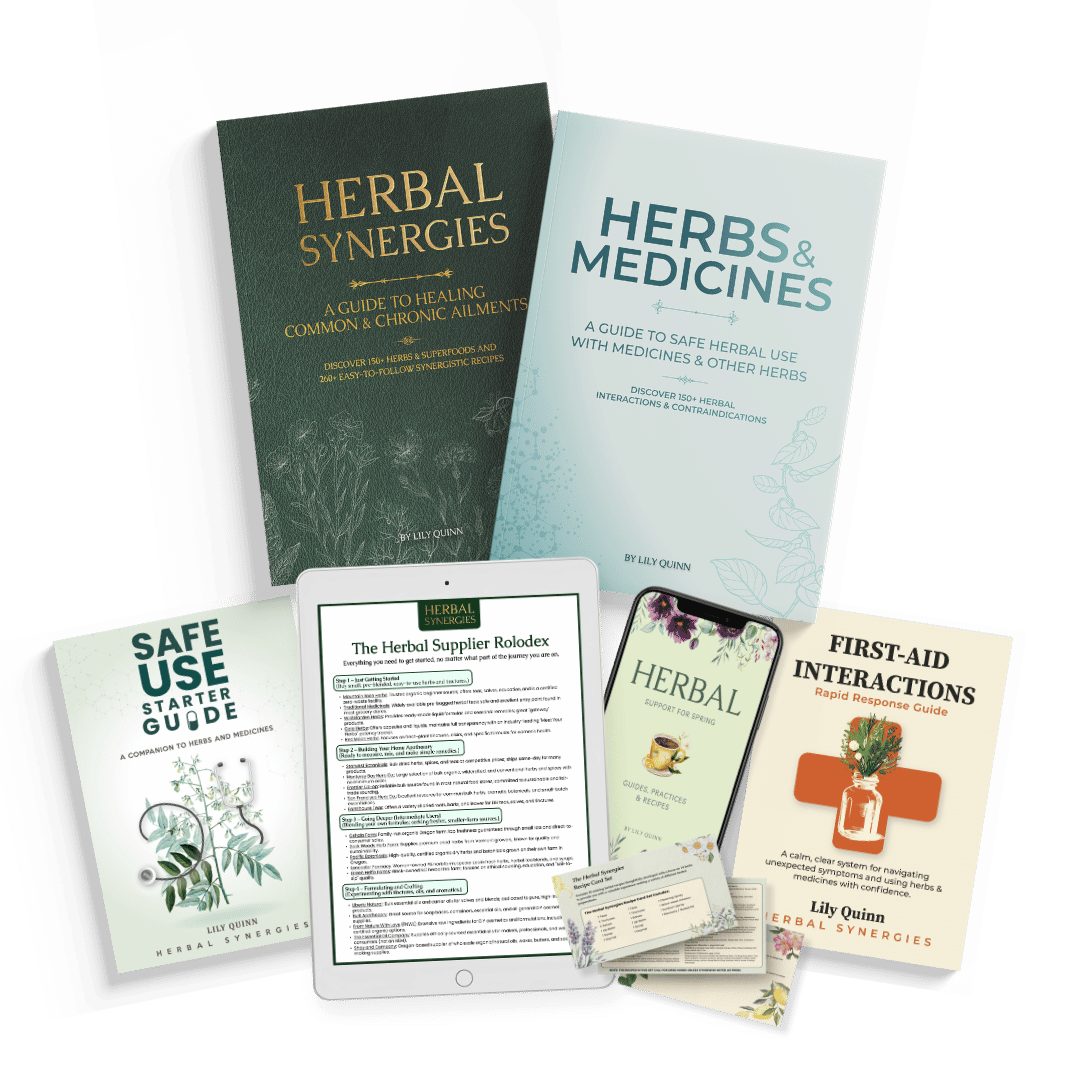
Interactions are not only between herbs and drugs. Reference books often flag herbs that should not be combined with each other because they push in the same direction. In Herbs & Medicines, for example, the valerian page lists kava, St. John's wort, passionflower, lemon balm and chamomile among herbs to keep apart from it, and its contraindicated medications include sedatives and sleep medications, benzodiazepines and alcohol. The kava page likewise lists valerian root, St. John's wort and passionflower.
One reference for both kinds of conflict. Herbs & Medicines profiles 150 herbs, and each page lists the medications and the other herbs it should not be combined with. See Herbs & Medicines. Interested in combinations that are meant to work together? The Herbal Synergies + Herbs & Medicines bundle pairs both books.

Why Labels and Interaction Checkers Can Miss Things
Many people assume that if a combination were risky, the bottle would say so. In practice, supplement labels vary widely, and an herb may appear in a product under a Latin name, as one ingredient in a blend, or in a tea you would not think of as a "supplement." A few common blind spots:
- Blends and "complexes" that contain several herbs, some of which may carry interaction flags.
- Teas and tinctures that people often leave off their medication lists.
- Products started by a family member or picked up "for sleep" or "for energy" without much thought.
- Changes over time. A combination that was reviewed once may change when a new prescription is added.
The fix is not to memorize every interaction. It is to keep one up-to-date list and have a pharmacist review it whenever anything changes, on either the medicine side or the supplement side.
A 5-Step Check Before Adding Any Herb
- Make a complete list of prescriptions, over-the-counter medicines, vitamins, herbs, teas and blends.
- Read full ingredient labels. Blends may contain several flagged herbs.
- Ask your pharmacist to check the full list, not just one product.
- Tell your prescriber before starting or stopping an herb, and ask whether monitoring is needed.
- Mention supplements before surgery. The FDA notes providers may ask you to stop them two or three weeks beforehand (FDA).

Frequently Asked Questions
Is this a complete list?
No. It covers herbs that authoritative sources flag most often. Any herb can matter in the right combination, which is why a pharmacist review of your full list is the best safeguard.
Are online interaction checkers enough?
They are a useful starting point, but they depend on the products you enter and may miss blends or herb-to-herb combinations. A pharmacist who knows your history can interpret results in context.
Should I stop my herbs before a doctor's visit?
No. Keep taking things as you normally would unless told otherwise, and bring the full list and labels. Stopping or starting products right before an appointment can make it harder for your clinician to understand your usual routine and test results.
Who is the best person to ask?
Your pharmacist is often the most accessible expert on interactions, because they see your full prescription record. Your prescriber should also know, since they decide doses and monitoring.
The Takeaway
St. John's wort, ginkgo, garlic supplements, goldenseal, ashwagandha, ginseng, green tea extract and turmeric are among the herbs most often flagged with medications. Talk to your doctor or pharmacist before combining any herb with a prescription. To prepare for that conversation, keep a reference such as Herbs & Medicines close at hand.
Sources
- U.S. FDA. Mixing Medications and Dietary Supplements Can Endanger Your Health. fda.gov
- NCCIH. Turmeric. nccih.nih.gov
- NCCIH. Herb-Drug Interactions: What the Science Says. nccih.nih.gov
- NCCIH. St. John's Wort. nccih.nih.gov
- NCCIH. Ginkgo. nccih.nih.gov
- NCCIH. Garlic. nccih.nih.gov
- NCCIH. Ashwagandha. nccih.nih.gov
- NCCIH. Asian Ginseng. nccih.nih.gov
- MedlinePlus. Warfarin. medlineplus.gov
Disclaimer: This article is for educational purposes only and is not intended to diagnose, treat, cure or prevent any disease. It is not a substitute for professional medical advice. Always consult your doctor or pharmacist before starting, stopping or combining any herb, supplement or medication. Statements about herbs have not been evaluated by the Food and Drug Administration.
This article is educational and is not a substitute for individualized medical or medication guidance from your physician, pharmacist, or other healthcare professional. Herbs can interact with medications and with each other; always confirm anything new with your provider. These statements have not been evaluated by the Food and Drug Administration.
How we research and review
Guides in the Herbal Reference Library draw on the same reference system as our books, which point to more than 500 scientific citations readers can check for themselves. Every recommendation is framed as support for everyday wellness, never as a treatment or a cure, and safety notes direct readers to confirm combinations with their own healthcare professional.
The Herbal Synergies Research Team compiles and reviews every guide in the Herbal Reference Library, drawing on published research, recognized herbal monographs, and current medication references. Our guides are written to support everyday wellness and always point you back to a qualified healthcare professional before you combine anything new.