Herbs and Diabetes Medication: Interactions to Know

Herbal products marketed for "blood sugar support" fill a whole aisle. For people already taking metformin, insulin or other diabetes medicines, that raises an important question: can these herbs interact with what my doctor prescribed?
Sometimes, yes. Some herbs are studied precisely because they may affect blood glucose, which means they could add to a medicine's effect. Others may change how a medicine is handled by the body. This guide summarizes what authoritative sources say and how to approach the question safely.
Educational notice: this article is for general education and is not medical advice. Do not start, stop or change any medication or supplement without talking to your doctor or pharmacist.
What Federal Health Sources Say
The NCCIH's page on diabetes and dietary supplements makes three points that frame everything else (NCCIH: Diabetes and Dietary Supplements):
- Using herbal supplements such as cinnamon, St. John's wort or aloe alongside conventional diabetes drugs can cause unwanted side effects.
- People who take diabetes medicines should tell their health care providers about any herbal supplements they use.
- Replacing medical treatment for diabetes with an unproven product or practice is very risky.
On effectiveness, NCCIH notes that research on herbs studied for diabetes, including ginseng, "hasn't proven that any of these herbal supplements are effective." That matters: these products are not substitutes for prescribed care.
Herbs Commonly Flagged With Diabetes Medicines
Cinnamon
NCCIH reports that a 2019 review found cinnamon supplementation "helped reduce fasting blood glucose and insulin resistance" in people with prediabetes or type 2 diabetes. It also notes that cassia cinnamon contains coumarin, which may worsen liver disease in some people (NCCIH). If an herb may lower glucose, combining it with glucose-lowering medicine is something to plan with your care team rather than try on your own.
Asian ginseng
NCCIH states that "some evidence suggests that Asian ginseng might lower blood sugar levels" and that people with diabetes should consult their health care provider before using it. It also notes ginseng "might interact with certain medications" (NCCIH: Asian Ginseng).
Goldenseal and berberine-containing herbs
NCCIH's clinician digest reports that in a 2021 study, "levels of metformin decreased about 25 percent in healthy adults who were given goldenseal extract plus metformin," which it notes could hinder glucose control in people with type 2 diabetes (NCCIH: Herb-Drug Interactions). NCCIH also warns that berberine, a compound found in goldenseal and other plants, "may interact with some medicines" (NCCIH).
Ashwagandha
NCCIH lists diabetes medicines among the drug types ashwagandha might interact with (NCCIH: Ashwagandha). Many people take ashwagandha for stress or sleep without realizing it carries this flag. See also our guide to ashwagandha and thyroid medication.
St. John's wort
St. John's wort is named by NCCIH among herbs that can cause unwanted side effects with diabetes drugs, and it is a well-known inducer of drug-metabolizing enzymes (NCCIH). Read more in St. John's Wort Drug Interactions.

Two Directions of Risk
Herb-diabetes medicine interactions can work in two directions:
- Too much effect. An herb that may lower blood glucose, taken with a medicine that also lowers it, could in principle increase the chance of low blood sugar. Ask your doctor what symptoms of low blood sugar to watch for and how to respond.
- Too little effect. An herb that lowers a medicine's blood levels, as reported for goldenseal with metformin, could make glucose control harder.
Either way, the remedy is the same: tell your care team, and use your glucose monitoring to spot changes if your doctor agrees to a trial.
How Herbal References Flag This
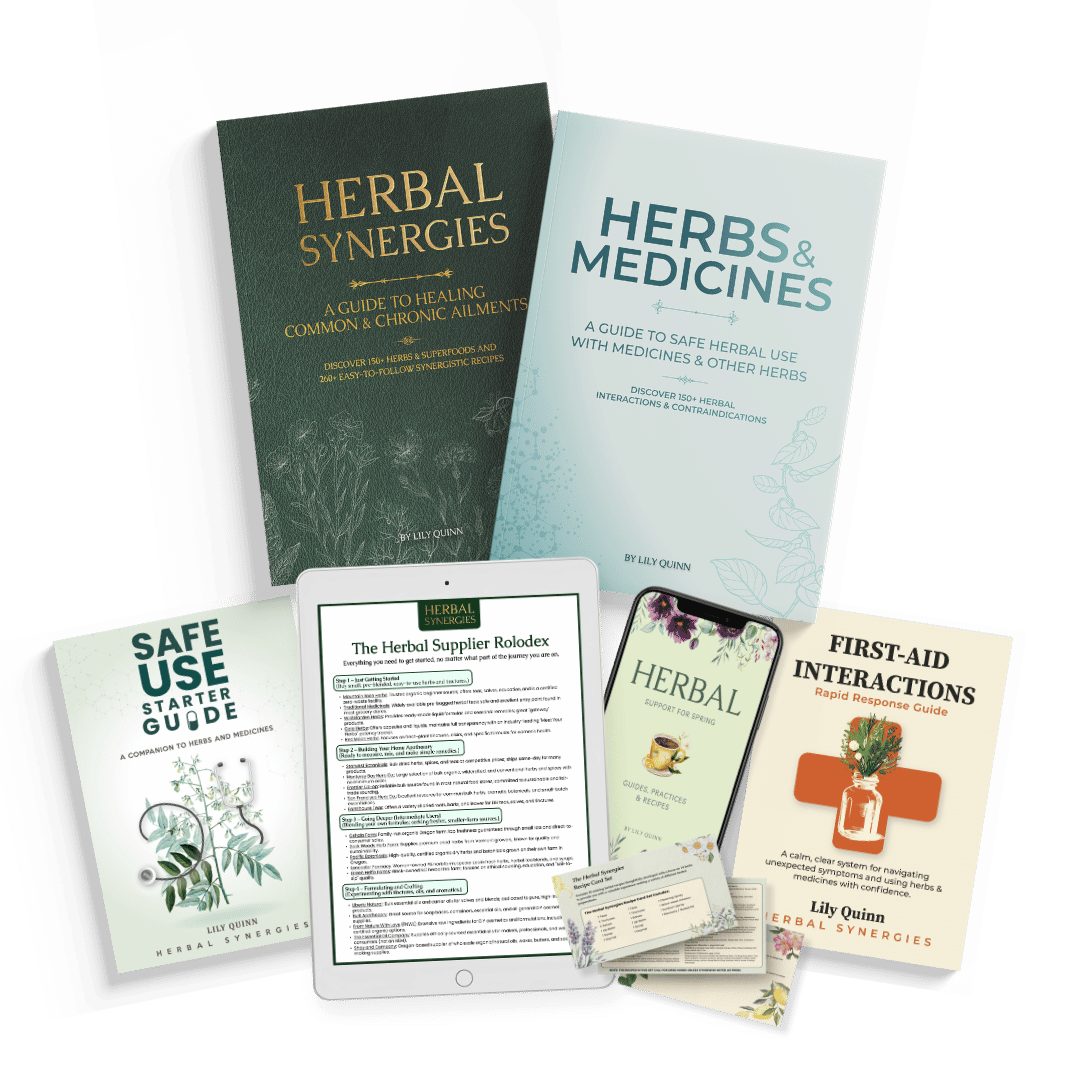
The diabetes-medication flag shows up across many herb profiles in Herbs & Medicines. Diabetes medications (often named as insulin and metformin) appear among the contraindicated medications on the pages for ashwagandha, ginger, garlic, ginkgo, turmeric and echinacea, among others. Several of these are herbs people take for reasons that have nothing to do with blood sugar, which is exactly why the flag is easy to miss.
Catch the flags you didn't know to look for. Herbs & Medicines lists, for each of its 150 herbs, the medications and herbs it should not be combined with. Bring it to your next pharmacy visit. Get Herbs & Medicines.

Reading a "Blood Sugar Support" Label
Products sold for blood sugar often combine several botanicals with vitamins and minerals. Before you discuss one with your pharmacist, it helps to read the label carefully:
- Find every botanical ingredient, not just the one on the front of the bottle. A cinnamon product may also contain other herbs.
- Note the form and amount. "Extract," "standardized" and "concentrated" products are different exposures from a kitchen spice.
- Check for proprietary blends. A blend may list ingredients without individual amounts, which makes it harder for anyone to judge the combination.
- Look for overlap with your other supplements. If you already take ginseng or a berberine product separately, a blend may double up.
Take a photo of the label or bring the bottle itself. Your pharmacist can only check what they can see.
Keeping a Simple Log
If your doctor agrees that you can try an herbal product, a short written log makes the trial more useful and safer. Record the product name and amount, the date you started, your usual glucose readings before starting, any readings that look unusual afterward, and any symptoms you notice. Share it at your next appointment. A log turns "I think it helped" or "something felt off" into information your care team can actually use, and it makes it easier to stop the right product if something changes.

A Safe Process for People on Diabetes Medicines
- Write down every supplement you take or are considering, including teas and "blend" products, with the full ingredient list.
- Ask your pharmacist to check each ingredient against your diabetes medicines and other prescriptions.
- Tell your prescriber before starting, and ask whether to check blood glucose more often for a while.
- Change one thing at a time so you and your clinician can tell what caused any change.
- Never reduce or stop diabetes medicine because you started an herb. Dose changes belong to your prescriber.
Frequently Asked Questions
Is cinnamon in food a problem?
The concerns NCCIH describes relate to supplements and larger amounts. If you plan to take cinnamon supplements, discuss it with your provider, especially given the coumarin content of cassia cinnamon.
Can herbs replace metformin?
No. NCCIH warns that replacing medical treatment for diabetes with an unproven product is very risky, and research has not proven these supplements effective.
What about "blood sugar support" blends?
Blends can contain several of the herbs above at once. Bring the label to your pharmacist so each ingredient can be checked.
The Takeaway
Cinnamon, ginseng, goldenseal and berberine, ashwagandha and St. John's wort are among the herbs flagged with diabetes medicines, and several common herbs carry the same caution in reference books. Talk to your doctor or pharmacist before adding any of them. For a quick way to see which herbs carry a diabetes-medication flag, see Herbs & Medicines.
Sources
- NCCIH. Diabetes and Dietary Supplements. Last updated November 2023. nccih.nih.gov
- NCCIH. Asian Ginseng. nccih.nih.gov
- NCCIH. Herb-Drug Interactions: What the Science Says. nccih.nih.gov
- NCCIH. Ashwagandha. nccih.nih.gov
Disclaimer: This article is for educational purposes only and is not intended to diagnose, treat, cure or prevent any disease. It is not a substitute for professional medical advice. Always consult your doctor or pharmacist before starting, stopping or combining any herb, supplement or medication. Statements about herbs have not been evaluated by the Food and Drug Administration.
This article is educational and is not a substitute for individualized medical or medication guidance from your physician, pharmacist, or other healthcare professional. Herbs can interact with medications and with each other; always confirm anything new with your provider. These statements have not been evaluated by the Food and Drug Administration.
How we research and review
Guides in the Herbal Reference Library draw on the same reference system as our books, which point to more than 500 scientific citations readers can check for themselves. Every recommendation is framed as support for everyday wellness, never as a treatment or a cure, and safety notes direct readers to confirm combinations with their own healthcare professional.
The Herbal Synergies Research Team compiles and reviews every guide in the Herbal Reference Library, drawing on published research, recognized herbal monographs, and current medication references. Our guides are written to support everyday wellness and always point you back to a qualified healthcare professional before you combine anything new.