Ashwagandha and Thyroid Medication: What to Know

Ashwagandha has become one of the best-selling herbal supplements, often marketed for stress and sleep. At the same time, millions of people take thyroid hormone medication such as levothyroxine every morning. Many of them reasonably ask: is it safe to take both?
The short answer is that this is a combination to discuss with your doctor before starting, not one to try on your own. Ashwagandha appears to influence thyroid hormone levels, federal health sources flag thyroid medication as a possible interaction, and there are published case reports of thyroid problems linked to the herb.
Educational notice: this article is for general education and is not medical advice. Do not start, stop or change any medication or supplement without talking to your doctor or pharmacist.
What Federal Health Sources Say
The NCCIH ashwagandha page lists "thyroid hormone medications" among the types of drugs ashwagandha might interact with, alongside medicines for diabetes and blood pressure, immunosuppressants, sedatives and anticonvulsants. It also states that ashwagandha is "not recommended for those who have autoimmune or thyroid disorders" (NCCIH: Ashwagandha).
NCCIH adds several other points worth knowing:
- Ashwagandha "may be safe when taken in the short term (up to 3 months)," but there is not enough information on long-term safety.
- Possible side effects include drowsiness, stomach upset, diarrhea and vomiting.
- Although rare, "there have been a number of cases that link liver injury to ashwagandha supplements."
- It should be avoided during pregnancy and not used while breastfeeding, and people about to have surgery or with hormone-sensitive prostate cancer are advised to avoid it.
Why Ashwagandha and Thyroid Medicine Is a Concern
Ashwagandha may raise thyroid hormone levels
The main concern is not that ashwagandha blocks levothyroxine absorption. It is that ashwagandha may itself push thyroid hormone levels upward. In a 2018 randomized, double-blind, placebo-controlled pilot trial, 50 adults with subclinical hypothyroidism (elevated TSH) took 600 mg of ashwagandha root extract daily or placebo for eight weeks. Compared with placebo, the ashwagandha group had significant changes in TSH, T3 and T4 (Sharma et al., J Altern Complement Med, 2018).
That study was small, short, and not done in people taking thyroid medication. But it suggests a mechanism for concern: if levothyroxine is already dosed to bring your levels into range, adding something that also nudges thyroid hormones upward could, in principle, push them too high.
Case reports of thyrotoxicosis
Case reports describe what can happen in individuals. One published report describes a 73-year-old woman who developed a rapid heart rhythm (supraventricular tachycardia), symptoms of hyperthyroidism and very low TSH after two years of using ashwagandha root extract as self-treatment for hypothyroidism. Her symptoms and lab results improved after she stopped the supplement (Kamal et al., Cureus, 2022). The authors describe this as a rare but possible effect.
A single case cannot prove cause and effect, but it shows why self-treating a thyroid condition with an herb, or adding one on top of prescribed thyroid medicine without monitoring, is not a good idea.

Levothyroxine Is Sensitive to What You Take With It
Levothyroxine is a medicine where small changes matter. MedlinePlus advises telling your doctor and pharmacist about "nutritional supplements, and herbal products you are taking or plan to take," and notes your doctor "may need to change the doses of your medications or monitor you carefully" (MedlinePlus: Levothyroxine).
MedlinePlus also notes that levothyroxine is usually taken once a day on an empty stomach, 30 minutes to 1 hour before breakfast, and that calcium carbonate or iron should be taken at least 4 hours before or after it. Spacing like this helps with absorption interactions in the gut. It does not address a supplement that changes thyroid hormone levels throughout the body, which is why spacing alone is not a solution for ashwagandha.
Ashwagandha's Other Interaction Flags
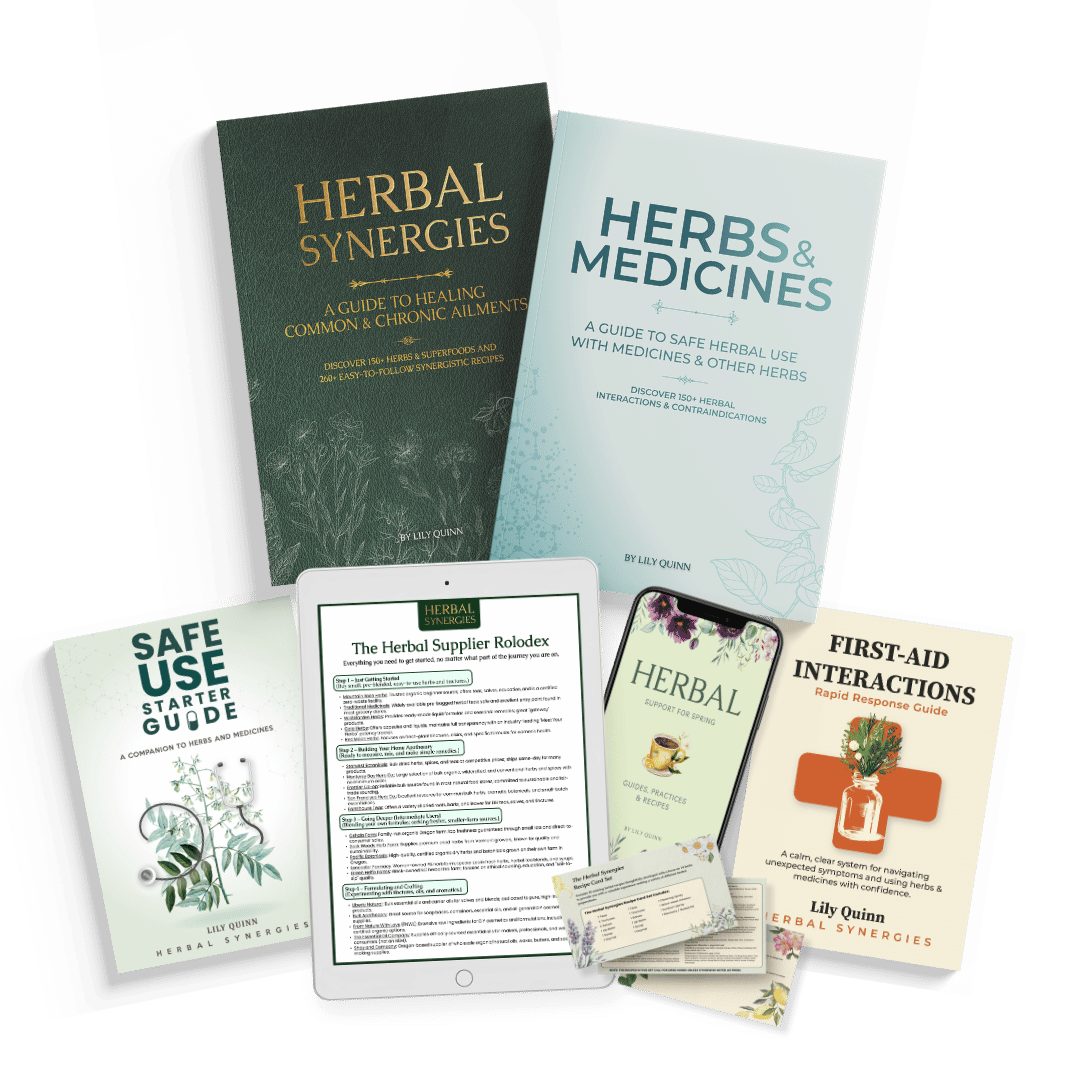
Thyroid medicine is not the only consideration. In Herbs & Medicines, the ashwagandha page lists these medications not to combine it with: diabetes medications (insulin, metformin), blood pressure medications, sedatives and sleep medications, anti-seizure medications, and thyroid hormone medications. It lists these herbs to keep apart from it: valerian root, kava kava, St. John's wort, ginseng and bitter orange.
That aligns with the medication categories NCCIH names. Many people take ashwagandha for sleep, so the sedative overlap is especially relevant if you also take a prescription sleep aid or a calming herb like valerian. Read more in our guide to herbs not to mix with medication.
See every flag on one page. In Herbs & Medicines, each herb profile lists the medications and herbs to keep it apart from, including ashwagandha's thyroid, sedative and diabetes cautions. Explore Herbs & Medicines.

If You Take Thyroid Medication and Want to Try Ashwagandha
- Talk to the doctor who manages your thyroid first. They know your diagnosis (for example, hypothyroidism vs. Hashimoto's, an autoimmune condition) and your lab history.
- Ask about monitoring. If your doctor agrees to a trial, ask whether thyroid labs should be checked sooner than usual.
- Know the symptoms of too much thyroid hormone. Ask your doctor what to watch for, such as a racing or irregular heartbeat, and report changes.
- Do not change your levothyroxine dose yourself. Any adjustment should come from your prescriber based on labs.
- Review your other supplements and medicines, particularly sleep aids, sedatives, blood pressure and diabetes medicines.
A Simple Record to Bring to Your Appointment
Thyroid care is guided by lab results, so the more precisely you can describe what you take and when you started it, the easier it is for your doctor to interpret those results. Before your appointment, write down the exact product name and how much ashwagandha each dose contains, the date you started or plan to start, the time of day you take your thyroid medicine and any supplements, and any changes you have noticed in sleep, heart rate, energy or mood. Bring the bottle or a photo of the label. If you stop or change the product later, update your doctor, since that can also affect how your labs should be read.

Frequently Asked Questions
Can I take ashwagandha instead of my thyroid medicine?
No. Do not replace prescribed thyroid medication with an herb. The case report above describes thyrotoxicosis in someone who self-treated with ashwagandha. Decisions about thyroid treatment belong with your doctor.
Does taking ashwagandha at a different time of day prevent the interaction?
Timing helps with gut-absorption interactions, but the concern with ashwagandha is its possible effect on thyroid hormone levels, which timing does not address.
I have an autoimmune thyroid condition. Is ashwagandha OK?
NCCIH says ashwagandha is not recommended for people with autoimmune or thyroid disorders. Discuss it with your doctor before considering it.
The Takeaway
Ashwagandha may influence thyroid hormone levels, NCCIH lists thyroid hormone medicines as a possible interaction, and case reports describe thyrotoxicosis linked to the herb. If you take levothyroxine or another thyroid medication, talk to your doctor or pharmacist before starting ashwagandha, and agree on monitoring if you go ahead. For a quick reference to which herbs and medicines to raise at that appointment, see Herbs & Medicines.
Sources
- NCCIH. Ashwagandha. nccih.nih.gov/health/ashwagandha
- Sharma AK, Basu I, Singh S. Efficacy and Safety of Ashwagandha Root Extract in Subclinical Hypothyroid Patients: A Double-Blind, Randomized Placebo-Controlled Trial. J Altern Complement Med. 2018;24(3):243-248. PubMed 28829155
- Kamal HI, et al. Ashwagandha as a Unique Cause of Thyrotoxicosis Presenting With Supraventricular Tachycardia. Cureus. 2022;14(3):e23494. PubMed 35475098
- MedlinePlus. Levothyroxine. medlineplus.gov/druginfo/meds/a682461.html
Disclaimer: This article is for educational purposes only and is not intended to diagnose, treat, cure or prevent any disease. It is not a substitute for professional medical advice. Always consult your doctor or pharmacist before starting, stopping or combining any herb, supplement or medication. Statements about herbs have not been evaluated by the Food and Drug Administration.
This article is educational and is not a substitute for individualized medical or medication guidance from your physician, pharmacist, or other healthcare professional. Herbs can interact with medications and with each other; always confirm anything new with your provider. These statements have not been evaluated by the Food and Drug Administration.
How we research and review
Guides in the Herbal Reference Library draw on the same reference system as our books, which point to more than 500 scientific citations readers can check for themselves. Every recommendation is framed as support for everyday wellness, never as a treatment or a cure, and safety notes direct readers to confirm combinations with their own healthcare professional.
The Herbal Synergies Research Team compiles and reviews every guide in the Herbal Reference Library, drawing on published research, recognized herbal monographs, and current medication references. Our guides are written to support everyday wellness and always point you back to a qualified healthcare professional before you combine anything new.