The Sleep Stack: When Calming Herbs and Sleeping Pills Add Up

It usually starts with one thing. A cup of chamomile at nine. When that stops feeling like enough, a valerian capsule joins it. Then a friend swears by kava for "turning the brain off," so that goes in too. And on the really bad nights, there is still the prescription sleeping pill in the drawer. Each one, on its own, sounds gentle. Nobody ever sat down and decided to take four sedating things at once. It just stacked up, one sleepless week at a time.
We call this the sleep stack, and it is one of the most common patterns we see. The problem is not any single herb. It is that calming herbs and sleep medicines often push in the same direction, and pushes add up. This article explains why, what U.S. health agencies say about the most popular sleep herbs, and how to untangle a stack safely.
Educational notice: this article is for general education and is not medical advice. Do not start, stop or change any medication or supplement without talking to your doctor or pharmacist. Do not stop a prescribed sleep or anxiety medicine suddenly.
Why "Gentle" Things Can Add Up
Most interaction articles focus on one herb meeting one drug. The sleep stack is different: it is several things with a similar effect layered together. Herbalists sometimes call this negative synergy, where combining things that each seem mild produces a bigger effect than you intended.
The official guidance on each sleep herb hints at this. Again and again, the same warning appears: do not combine it with alcohol or other sedatives. When every item in your stack carries that same warning, the stack itself is the thing to worry about.
What the Agencies Say About Each Layer
Valerian
NCCIH says that valerian "should not be taken along with alcohol or sedatives," because it may have a sleep-inducing effect. It lists side effects including "headache, stomach upset, mental dullness, excitability, uneasiness, and vivid dreams," and notes that "in very rare cases, liver injury was reported when taking valerian, most often in combination with other herbals" (NCCIH: Valerian).
That phrase, "most often in combination with other herbals," is the sleep stack in a single line.
NCCIH is also candid about the evidence: "The evidence on whether valerian is helpful for sleep problems is inconsistent," and the American Academy of Sleep Medicine's 2017 guideline recommends against valerian for chronic insomnia in adults.
Kava
Kava carries the strongest warning of the group. NCCIH states that "kava should not be used together with other substances that have sedative effects, such as benzodiazepines or alcohol," and that "various kava products have been linked to rare cases of liver injury, some of which have been serious or even fatal." It adds that consuming kava "in large amounts or for prolonged periods of time may increase risk" (NCCIH: Kava).
Chamomile
Chamomile is the gentlest layer for most people. NCCIH says it "is likely safe when used orally in amounts commonly found in teas and other foods." But it also notes that interactions between chamomile and warfarin, and with some drugs metabolized by the liver, have been reported, and suggests possible interactions with sedatives. On sleep specifically, "there's very little information on chamomile's effect on insomnia" (NCCIH: Chamomile).
The prescription layer
Prescription sleep medicines already carry strict instructions about stacking. MedlinePlus, from the U.S. National Library of Medicine, tells people taking zolpidem (Ambien) to "not drink alcohol during your treatment," warns that "you should not take more than one sleeping pill on the same night," and notes that driving "the day after you take zolpidem may be impaired even if you feel fully awake." It also names St. John's wort as an herbal product that may interact with zolpidem (MedlinePlus: Zolpidem).
Read those lines with the stack in mind. If one extra sleeping pill is too many, it is fair to ask what three sedating herbs on top of one sleeping pill might do, and that is exactly the question to bring to a pharmacist.

The Hidden Second Overlap: The Liver
The sleep stack has a quieter overlap that people rarely consider. Kava has been linked to rare serious liver injury, valerian liver injury has been reported "most often in combination with other herbals," and chamomile has reported interactions with some drugs the liver processes. Each herb by itself is a small question. Several together, possibly alongside alcohol or other medicines that the liver also handles, become a bigger one.
This is why the FDA's general advice matters so much here: "Combining dietary supplements and medications could have dangerous and even life-threatening effects," and "natural does not always mean safe" (FDA).
What the Herbs & Medicines Book Flags
The Herbs & Medicines reference lists, for each herb, the medications and other herbs it should not be combined with. For the sleep herbs, the pattern is striking:
- Valerian: flagged with sedatives and sleep medications, anti-anxiety drugs (benzodiazepines), antidepressants (SSRIs, MAOIs), blood pressure medications and alcohol. Herbs flagged: kava, St. John's wort, passionflower, lemon balm and chamomile.
- Kava: flagged with sedative medications (benzodiazepines, sleep aids), alcohol, anticoagulants, liver-stressing drugs (acetaminophen, statins), and digoxin and cardiac medications. Herbs flagged: valerian root, St. John's wort, passionflower, ginkgo biloba and goldenseal.
- Chamomile: flagged with blood thinners (warfarin, heparin), sedatives and sleep medications, immunosuppressants (cyclosporine), diabetes medications and anesthetics. Herbs flagged: valerian root, kava kava, ginkgo biloba, passionflower and St. John's wort.
- Passionflower: flagged with benzodiazepines (Xanax, Ativan, Valium), sleep medications (Ambien, Lunesta), anticoagulants, barbiturates and anesthesia medications. Herbs flagged: valerian root, kava, St. John's wort, melatonin and chamomile.
Notice how the herbs point at each other. Valerian flags kava and chamomile; kava flags valerian; chamomile flags valerian and kava; passionflower flags all of them. The classic "sleepy tea plus sleepy capsule plus sleepy pill" routine is precisely the combination these pages warn about.

How to Untangle a Sleep Stack Safely
- Write down everything. Teas, capsules, gummies, tinctures, prescription and over-the-counter sleep aids, and alcohol. The FDA recommends bringing "a list of all the dietary supplements and medications you are currently taking" to each visit.
- Look for repeats. Many "sleep blends" already combine valerian, passionflower, lemon balm, hops and chamomile in one product. You may be taking the same herb twice.
- Ask a pharmacist to review the whole stack, not each item one by one.
- Never stop a prescription abruptly. Some sleep and anxiety medicines need a supervised taper. NCCIH also notes that stopping valerian after long-term use may cause withdrawal-like symptoms such as anxiety and insomnia.
- Take morning-after drowsiness seriously, especially before driving.
Frequently Asked Questions
Can I take valerian with a sleeping pill?
NCCIH says valerian should not be taken with alcohol or sedatives (NCCIH). Do not combine them without your prescriber's approval.
Is chamomile tea safe with sleep medication?
Chamomile in normal tea amounts is likely safe for most people, but NCCIH notes possible interactions with sedatives and reported interactions with warfarin. Mention your nightly tea to your pharmacist.
Is kava safe for sleep?
Kava has been linked to rare but sometimes serious liver injury and should not be combined with alcohol or benzodiazepines, according to NCCIH. Talk to your doctor before using it, especially with other sleep aids.
Do sleep herbs actually work?
The evidence is mixed. NCCIH calls the valerian evidence "inconsistent" and says there is "very little information" on chamomile and insomnia. Persistent insomnia deserves a proper medical evaluation.

The Takeaway
A sleep stack is built from good intentions, one gentle product at a time. But calming herbs and sleep medicines often push in the same direction, and several share the same warning: not with alcohol, not with other sedatives. Lay the whole stack on the table, look for overlaps, and let a pharmacist help you decide what stays.
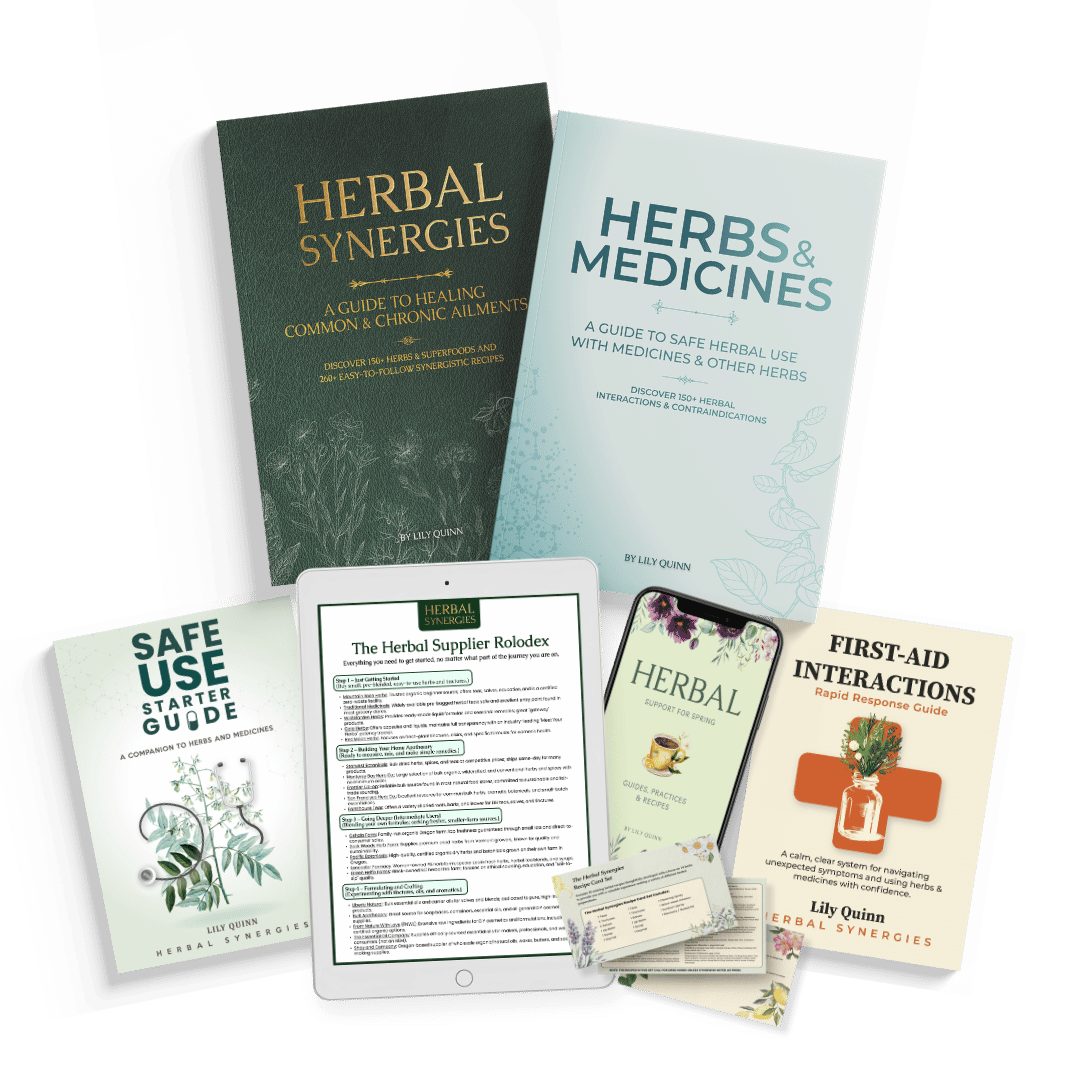
Want both sides of the story? The Herbal Synergies and Herbs & Medicines bundle pairs the green book's guide to how herbs work together with the blue book's herb-by-herb list of medications and herbs not to combine, so you can see the whole stack at once.
Sources
- NCCIH. Valerian. nccih.nih.gov/health/valerian
- NCCIH. Kava. nccih.nih.gov/health/kava
- NCCIH. Chamomile. nccih.nih.gov/health/chamomile
- MedlinePlus. Zolpidem. U.S. National Library of Medicine. medlineplus.gov/druginfo/meds/a693025.html
- U.S. FDA. Mixing Medications and Dietary Supplements Can Endanger Your Health. fda.gov
Disclaimer: This article is for educational purposes only and is not intended to diagnose, treat, cure or prevent any disease. It is not a substitute for professional medical advice. Always consult your doctor or pharmacist before starting, stopping or combining any herb, supplement or medication. Statements about herbs have not been evaluated by the Food and Drug Administration.
This article is educational and is not a substitute for individualized medical or medication guidance from your physician, pharmacist, or other healthcare professional. Herbs can interact with medications and with each other; always confirm anything new with your provider. These statements have not been evaluated by the Food and Drug Administration.
How we research and review
Guides in the Herbal Reference Library draw on the same reference system as our books, which point to more than 500 scientific citations readers can check for themselves. Every recommendation is framed as support for everyday wellness, never as a treatment or a cure, and safety notes direct readers to confirm combinations with their own healthcare professional.
The Herbal Synergies Research Team compiles and reviews every guide in the Herbal Reference Library, drawing on published research, recognized herbal monographs, and current medication references. Our guides are written to support everyday wellness and always point you back to a qualified healthcare professional before you combine anything new.